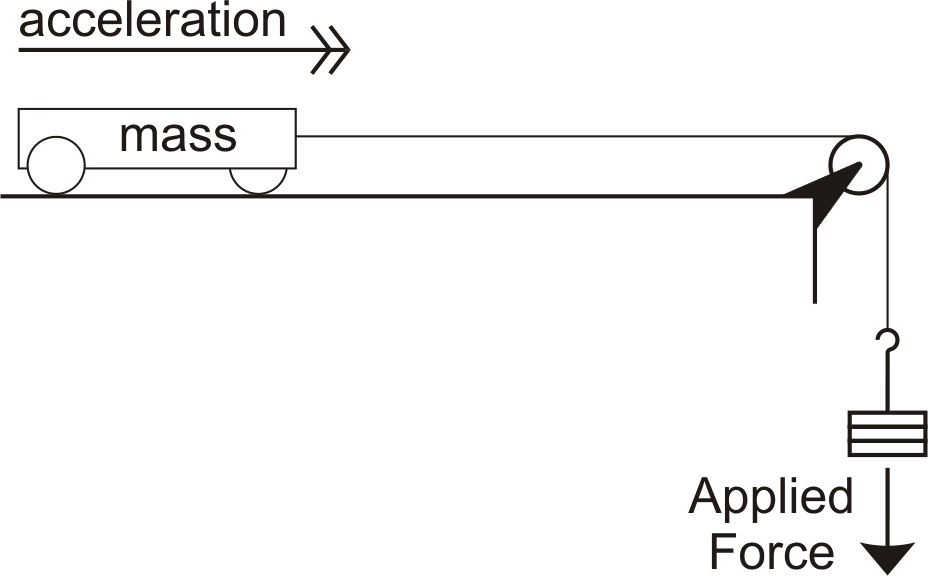
If the mass (of the trolley) is constant and the applied force is increased, then the acceleration _____.
If the applied force is constant and the mass (of the trolley) is increased then the acceleration _____.
We can say that the acceleration is proportional to the Force and inversely proportional to the mass.
This can be written mathematically as follows:
| a ∝ F |
|
We can combine these two proportionalities as follows:
| a | ∝ | F |
| m |
and rearrange to form:
F ∝ ma
The units of force are _____. One _____ is defined as the force required to give a _____ of 1kg, an _____ of 1m/s2. So our proportionality becomes an equality as follows:
| F = ma | |||||||||||||||||||||||||||||||||||||||||||||||||
where |
F | = | Force in Newtons, N | ||||||||||||||||||||||||||||||||||||||||||||||
| m | = | Mass of the object in Kilograms, kg | |||||||||||||||||||||||||||||||||||||||||||||||
| a | = | Acceleration of the object in metres per second per second, m/s/s or m/s2 or ms-2 | |||||||||||||||||||||||||||||||||||||||||||||||
This can be summarised in the following 'magic triangle':
